Understanding Peptide Synthesis: SPPS Explained
Key takeaways
- Introduction
- How SPPS Works
- Why SPPS Matters for Researchers
- Potential Impurities
Introduction
Research peptides are produced synthetically — not extracted from biological tissue. The most common method is Solid-Phase Peptide Synthesis (SPPS), which builds the peptide chain one amino acid at a time on a solid support. Researchers looking to buy peptides UK can rely on these synthesis methods to procure the best peptides UK.
How SPPS Works
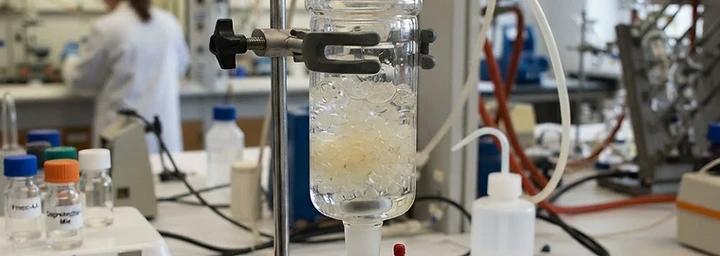
SPPS was developed by Robert Bruce Merrifield in the 1960s and revolutionised peptide chemistry. The process works as follows:
- Resin attachment — the first amino acid is attached to an insoluble resin support
- Deprotection — the protecting group on the amino acid's amine is removed, exposing it for the next coupling
- Coupling — the next amino acid (with its amine protected) is activated and coupled to the growing chain
- Washing — excess reagents and byproducts are washed away
- Repeat — deprotection and coupling are repeated for each amino acid in the sequence
- Cleavage — the completed peptide is cleaved from the resin
- Purification — the crude peptide is purified, typically by HPLC
- Lyophilisation — the purified peptide is freeze-dried into a stable powder
Why SPPS Matters for Researchers
SPPS offers several advantages that make it the standard for research peptide production:
- Sequence control — the amino acid sequence is precisely controlled by the chemist
- Custom sequences — peptides can be produced that are difficult or impossible to extract from natural sources
- Modifications — non-natural amino acids and modifications can be incorporated
- Purity — the process allows for highest purity peptides production, verified by HPLC
Potential Impurities
Despite its precision, SPPS can produce impurities:
- Deletion sequences — where an amino acid was missed during coupling
- Truncated sequences — where the chain was incompletely extended
- Incomplete deprotection — where a protecting group was not fully removed
This is why peptide testing is essential — HPLC purity and mass spectrometry identity verification confirm that the final product meets specification from any reputable peptide supplier UK.
Research Use Only
All peptides are for laboratory research use only. Not for human consumption, medical diagnosis, or treatment.
UK Locations Mentioned in This Article
From the locations referenced above to laboratories nationwide — HPLC Peps delivers research peptides across Britain.

Research-grade peptides for your laboratory
Browse the shop