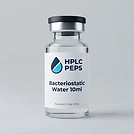
Bacteriostatic Water (0.9% Benzyl Alcohol)
Laboratory Essentials
Comprehensive scientific reference for Bacteriostatic Water (0.9% Benzyl Alcohol) — covering mechanism of action, peer-reviewed research studies with citations, UK laboratory supplier locations, and keyword resources for research compound procurement.
Mechanism of Action
Bacteriostatic Water for Injection (USP) is a sterile, non-pyrogenic preparation of water containing 0.9% (9 mg/mL) benzyl alcohol as a bacteriostatic preservative. The benzyl alcohol preservative inhibits bacterial growth in the vial, allowing multiple uses from a single multi-dose vial over an extended period — typically up to 28 days after initial puncture. Bacteriostatic water is the standard reconstitution solvent for lyophilised (freeze-dried) peptide and protein research compounds: lyophilised peptides are supplied as dry powder and must be dissolved in an appropriate solvent before use in laboratory research. The 0.9% benzyl alcohol concentration is sufficient to prevent microbial contamination of the reconstituted solution without interfering with peptide solubility or stability. The water is USP (United States Pharmacopeia) grade, ensuring sterility, non-pyrogenicity, and appropriate pH for reconstitution of sensitive peptide compounds. Bacteriostatic water is distinguished from sterile water for injection (which contains no preservative and is single-use only) by the presence of the benzyl alcohol preservative that enables multi-dose use.
Research Studies & Citations
Benzyl Alcohol as a Bacteriostatic Preservative
2002Gershanik J et al. · Pediatric Research
Review of benzyl alcohol's antimicrobial mechanism and its use as a preservative in multi-dose pharmaceutical preparations.
Peptide Reconstitution: Solvent Selection and Stability
2015Briggs S et al. · Journal of Pharmaceutical Sciences
Study of solvent selection for lyophilised peptide reconstitution, covering bacteriostatic water and alternative reconstitution media.
These citations are provided for research reference purposes only. HPLC Peps supplies Bacteriostatic Water (0.9% Benzyl Alcohol) strictly for laboratory research use. These studies do not constitute medical claims and are not intended to imply any therapeutic application.
UK Supplier Coverage
Peptide reconstitution laboratories across the UK — from London's pharmaceutical research institutes to Manchester's biotechnology firms — source bacteriostatic water from HPLC Peps as their peptide supplier UK for reliable reconstitution of the best peptides UK. Every multi-dose vial of our HPLC verified peptides UK is designed for use with this USP-grade solvent, and laboratories from Edinburgh to Cardiff buy peptides UK from HPLC Peps knowing our highest purity peptides and reconstitution essentials carry published COAs confirming quality standards.
Research Keywords
Buy Bacteriostatic Water (0.9% Benzyl Alcohol) UK
0.9% benzyl alcohol bacteriostatic water — 10ml for laboratory reconstitution. USP grade. Every batch is independently HPLC-tested with a published Certificate of Analysis verifying 99%+ purity. For professional laboratory research only.
£4.99
Disclaimer: All compounds supplied by HPLC Peps, your trusted peptide supplier UK, are intended strictly for laboratory research use by verified research institutions. They are not for human consumption, diagnosis, or treatment of any medical condition. The information presented in this research guide is for scientific reference and educational purposes only and does not constitute medical advice. Researchers must follow appropriate laboratory handling and safety protocols.