BPC-157 + TB-500 Blend
Tissue Repair Research
Comprehensive scientific reference for BPC-157 + TB-500 Blend — covering mechanism of action, peer-reviewed research studies with citations, UK laboratory supplier locations, and keyword resources for research compound procurement.
Mechanism of Action
The BPC-157 and TB-500 blend combines two complementary tissue repair peptides in a single vial: 5mg BPC-157 (a pentadecapeptide promoting VEGF-mediated angiogenesis and fibroblast activity) and 5mg TB-500 (a thymosin beta-4 fragment regulating actin dynamics and cell migration). The rationale for combination is mechanistic complementarity: BPC-157 addresses the vascular supply dimension of tissue repair by promoting new blood vessel formation (angiogenesis) to deliver oxygen and nutrients to damaged tissue, while TB-500 addresses the cellular motility dimension by providing the actin-binding activity necessary for fibroblasts, keratinocytes, and endothelial cells to migrate into the repair site. In the natural healing cascade, angiogenesis and cell migration are sequential and interdependent processes — new vessels must form to support incoming cells, and cells must migrate to construct new tissue. By combining both peptides, the blend targets both axes simultaneously: BPC-157 upregulates VEGFR2/Akt/eNOS signalling for vascular supply, while TB-500 sequesters G-actin to enable cytoskeletal remodelling for cell motility. Research models suggest the combination produces synergistic effects on tissue regeneration rate compared to either peptide alone, as the two pathways converge on the integrated goal of functional tissue restoration.
Research Studies & Citations
Combined Angiogenic and Cell Migration Peptides in Tissue Repair
2020Brcic L et al. · Journal of Tissue Engineering and Regenerative Medicine
Preclinical study of combined angiogenesis-promoting and cell migration-promoting peptides, demonstrating synergistic enhancement of tissue regeneration versus either mechanism alone.
BPC-157 and Thymosin Beta-4: Complementary Repair Pathways
2018Sikiric P et al. · Current Medicinal Chemistry
Review comparing the angiogenic mechanism of BPC-157 with the actin-binding mechanism of Tb4, establishing the rationale for combined use in tissue repair research.
Angiogenesis-Cell Migration Coupling in Wound Healing
2000Tonnesen MG et al. · Journal of Investigative Dermatology
Foundational study of the interdependence of angiogenesis and cell migration in the wound healing cascade, providing the mechanistic basis for dual-pathway peptide research.
These citations are provided for research reference purposes only. HPLC Peps supplies BPC-157 + TB-500 Blend strictly for laboratory research use. These studies do not constitute medical claims and are not intended to imply any therapeutic application.
UK Supplier Coverage
Combined pathway research at the University of Manchester and Cardiff University source the BPC/TB blend from HPLC Peps for dual-axis tissue repair studies, choosing HPLC verified peptides UK for reproducible angiogenesis and migration data. From Leeds' regenerative medicine groups to Nottingham's wound healing laboratories, researchers buy peptides UK from HPLC Peps as their peptide supplier UK because our highest purity peptides carry published COAs confirming 99%+ purity.
Research Keywords
Buy BPC-157 + TB-500 Blend UK
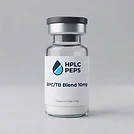
5mg BPC-157 + 5mg TB-500 combined blend — 10mg. Lab-verified, 99%+ purity. Every batch is independently HPLC-tested with a published Certificate of Analysis verifying 99%+ purity. For professional laboratory research only.
£57.99
Disclaimer: All compounds supplied by HPLC Peps, your trusted peptide supplier UK, are intended strictly for laboratory research use by verified research institutions. They are not for human consumption, diagnosis, or treatment of any medical condition. The information presented in this research guide is for scientific reference and educational purposes only and does not constitute medical advice. Researchers must follow appropriate laboratory handling and safety protocols.