
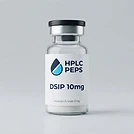
DSIP (Delta Sleep-Inducing Peptide)
Growth Hormone Research
Comprehensive scientific reference for DSIP (Delta Sleep-Inducing Peptide) — covering mechanism of action, peer-reviewed research studies with citations, UK laboratory supplier locations, and keyword resources for research compound procurement.
Mechanism of Action
Delta Sleep-Inducing Peptide (DSIP) is a neuromodulating nonapeptide (Trp-Ala-Gly-Gly-Asp-Ala-Ser-Gly-Glu) first isolated from the cerebral venous blood of rabbits during slow-wave (delta) sleep. DSIP's mechanism centres on its modulation of sleep-regulating neuroendocrine signalling pathways in the central nervous system. Unlike many neuropeptides that act through a single identified receptor, DSIP's activity appears to be mediated through multiple pathways: it modulates GABAergic signalling (the primary inhibitory neurotransmitter system), influences serotonergic and dopaminergic pathway activity, and may interact with endogenous sleep-regulating factors in the hypothalamus and brainstem. DSIP is studied for its role in promoting slow-wave (delta) sleep — the deepest stage of non-REM sleep associated with restorative functions and growth hormone release. The peptide also modulates the hypothalamic-pituitary-adrenal (HPA) axis, influencing corticotropin-releasing hormone (CRH) and adrenocorticotropic hormone (ACTH) signalling, which connects sleep regulation to stress response pathways. Additionally, DSIP has been investigated for effects on luteinising hormone (LH) and growth hormone release, linking sleep neuroendocrinology to reproductive and metabolic research.
Research Studies & Citations
DSIP: Discovery and Sleep-Regulating Activity
1977Monnier M et al. · Neuroscience Letters
Foundational study identifying DSIP in cerebral venous blood during slow-wave sleep and characterising its sleep-inducing activity.
DSIP and Neuroendocrine Signalling
1990Schneider-Helmert D et al. · Pharmacopsychiatry
Study of DSIP's modulation of the HPA axis and its effects on sleep-regulating neuroendocrine pathways.
Delta Sleep and Growth Hormone Release
2000Van Cauter E et al. · Sleep Medicine Reviews
Review of the relationship between slow-wave sleep and GH release, providing context for DSIP's neuroendocrine effects.
These citations are provided for research reference purposes only. HPLC Peps supplies DSIP (Delta Sleep-Inducing Peptide) strictly for laboratory research use. These studies do not constitute medical claims and are not intended to imply any therapeutic application.
UK Supplier Coverage
Sleep neuroendocrinology research at King's College London and the University of Manchester source DSIP from HPLC Peps for slow-wave sleep signalling studies, choosing HPLC verified peptides UK for reproducible neuroendocrine assay data. From Aberdeen's sleep research centres to Glasgow's neuroscience laboratories, researchers buy peptides UK from HPLC Peps as their peptide supplier UK because our highest purity peptides carry published COAs confirming 99%+ purity.
Research Keywords
Buy DSIP (Delta Sleep-Inducing Peptide) UK
Delta Sleep-Inducing Peptide — 10mg lyophilised research peptide. Lab-verified, 99%+ purity. Best UK peptides. Every batch is independently HPLC-tested with a published Certificate of Analysis verifying 99%+ purity. For professional laboratory research only.
Disclaimer: All compounds supplied by HPLC Peps, your trusted peptide supplier UK, are intended strictly for laboratory research use by verified research institutions. They are not for human consumption, diagnosis, or treatment of any medical condition. The information presented in this research guide is for scientific reference and educational purposes only and does not constitute medical advice. Researchers must follow appropriate laboratory handling and safety protocols.