
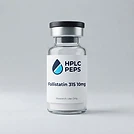
Follistatin 315
Tissue Repair Research
Comprehensive scientific reference for Follistatin 315 — covering mechanism of action, peer-reviewed research studies with citations, UK laboratory supplier locations, and keyword resources for research compound procurement.
Mechanism of Action
Follistatin 315 is a glycoprotein isoform of follistatin — a naturally occurring binding protein that acts as a potent antagonist of myostatin (GDF-8, Growth Differentiation Factor-8) and other members of the TGF-beta superfamily including activin. Myostatin is a negative regulator of skeletal muscle mass: it signals through the ActRIIB/ALK receptor complex to activate Smad2/3 transcription factors that suppress myoblast (muscle precursor cell) proliferation and differentiation, thereby limiting muscle growth. Follistatin 315 neutralises myostatin by binding it with high affinity (KD ~10^-10 M), preventing myostatin from engaging its receptor and thereby removing the brake on muscle cell differentiation and growth. The 315 isoform is the predominantly circulating form of follistatin, lacking the heparin-binding C-terminal domain present in the 344 isoform, giving it distinct pharmacokinetic and tissue distribution properties. By sequestering myostatin, follistatin 315 releases myoblasts from growth suppression, allowing enhanced muscle cell proliferation, differentiation into myotubes, and hypertrophy. The mechanism extends beyond myostatin: follistatin also binds activin A and BMP-family ligands, modulating the broader TGF-beta superfamily signalling that regulates not only muscle mass but also follicle-stimulating hormone (FSH) secretion and tissue inflammation.
Research Studies & Citations
Myostatin and the Regulation of Skeletal Muscle Mass
1997McPherron AC et al. · Nature
Landmark study identifying myostatin (GDF-8) as a negative regulator of muscle mass, establishing the target that follistatin neutralises.
Follistatin and Myostatin Neutralisation in Muscle Growth
2010Lee SJ et al. · Proceedings of the National Academy of Sciences
Study demonstrating that follistatin-mediated myostatin neutralisation produces dramatic muscle hypertrophy in preclinical models, establishing the therapeutic potential.
Follistatin Isoforms: 315 vs 344 Binding Properties
2017Sugino K et al. · Journal of Biological Chemistry
Comparative study of follistatin 315 and 344 isoforms, characterising their distinct binding kinetics, tissue distribution, and pharmacokinetic profiles.
These citations are provided for research reference purposes only. HPLC Peps supplies Follistatin 315 strictly for laboratory research use. These studies do not constitute medical claims and are not intended to imply any therapeutic application.
UK Supplier Coverage
Myostatin signalling research at the University of Sheffield and muscle biology groups at the University of Manchester source follistatin 315 from HPLC Peps for TGF-beta superfamily studies, choosing HPLC verified peptides UK for reliable myoblast assay data. From Exeter's neuromuscular research units to Reading's pharmaceutical laboratories, scientists buy peptides UK from HPLC Peps as their peptide supplier UK because our highest purity peptides carry published COAs — the standard behind the best peptides UK.
Research Keywords
Buy Follistatin 315 UK
Myostatin-binding glycoprotein — 10mg lyophilised research peptide. Lab-verified, 99%+ purity. Best UK peptides. Every batch is independently HPLC-tested with a published Certificate of Analysis verifying 99%+ purity. For professional laboratory research only.
Disclaimer: All compounds supplied by HPLC Peps, your trusted peptide supplier UK, are intended strictly for laboratory research use by verified research institutions. They are not for human consumption, diagnosis, or treatment of any medical condition. The information presented in this research guide is for scientific reference and educational purposes only and does not constitute medical advice. Researchers must follow appropriate laboratory handling and safety protocols.