GHK-Cu
Tissue Repair Research
Comprehensive scientific reference for GHK-Cu — covering mechanism of action, peer-reviewed research studies with citations, UK laboratory supplier locations, and keyword resources for research compound procurement.
Mechanism of Action
As the highest purity peptides option for copper-peptide collagen research, GHK-Cu (Copper Tripeptide-1) is a naturally occurring tripeptide (Gly-His-Lys) that forms a complex with copper(II) ions, serving as the primary physiological carrier of bioavailable copper to cells. The GHK-Cu complex delivers copper to cellular copper transporters (CTR1) and intracellular chaperones, making copper available for copper-dependent enzymes critical to tissue repair: lysyl oxidase (which cross-links collagen and elastin in the extracellular matrix), tyrosinase (melanin synthesis), superoxide dismutase (antioxidant defence), and cytochrome C oxidase (mitochondrial energy production). The mechanism extends beyond copper delivery: GHK-Cu directly modulates gene expression through binding to the promoter region of genes involved in tissue remodelling. At the molecular level, GHK-Cu upregulates expression of collagen types I and III, elastin, and fibronectin in fibroblasts, enhancing the structural protein deposition necessary for tissue regeneration. It also modulates matrix metalloproteinase (MMP) and tissue inhibitor of metalloproteinase (TIMP) expression, promoting controlled extracellular matrix remodelling rather than degradation. GHK-Cu exhibits anti-inflammatory effects through suppression of TNF-alpha, IL-6, and TGF-beta signalling, and promotes angiogenesis through VEGF pathway modulation. The characteristic blue colour of GHK-Cu solutions confirms the active copper-peptide complex, distinguishing genuine GHK-Cu from copper-free GHK tripeptide.
Research Studies & Citations
GHK-Cu: A Copper-Binding Peptide with Tissue Remodelling Activity
2015Pickart L et al. · Journal of Peptide Science
Comprehensive review of GHK-Cu's copper-delivery mechanism and its effects on collagen synthesis, elastin production, and extracellular matrix remodelling in tissue repair.
GHK-Cu Modulation of Gene Expression in Fibroblasts
2018Kang YA et al. · Journal of Cellular Physiology
Study demonstrating GHK-Cu's direct modulation of collagen, elastin, and MMP gene expression in human dermal fibroblasts.
Copper Peptide GHK-Cu in Wound Healing
2017Mu P et al. · Wound Repair and Regeneration
Preclinical wound healing study characterising GHK-Cu's promotion of angiogenesis, collagen deposition, and accelerated re-epithelialisation.
Lysyl Oxidase and Copper-Dependent Collagen Cross-Linking
2016Trackman PC et al. · Journal of Cellular Biochemistry
Mechanistic study of the role of copper delivery in lysyl oxidase activation and collagen-elastin cross-linking in the extracellular matrix.
These citations are provided for research reference purposes only. HPLC Peps supplies GHK-Cu strictly for laboratory research use. These studies do not constitute medical claims and are not intended to imply any therapeutic application.
UK Supplier Coverage
Collagen matrix research at the University of Oxford and wound healing groups at the University of Cambridge source GHK-Cu from HPLC Peps for copper-peptide signalling studies, selecting HPLC verified peptides UK for consistent gene expression data. From Edinburgh's tissue engineering centres to Bristol's dermatological research labs, scientists buy peptides UK from HPLC Peps as their peptide supplier UK because our highest purity peptides carry published COAs — the benchmark for the best reviewed peptides UK.
Research Keywords
Buy GHK-Cu UK
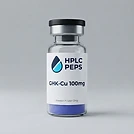
Copper peptide GHK-Cu — 100mg research compound. Lab-verified, 99%+ purity. Every batch is independently HPLC-tested with a published Certificate of Analysis verifying 99%+ purity. For professional laboratory research only.
£49.99
Disclaimer: All compounds supplied by HPLC Peps, your trusted peptide supplier UK, are intended strictly for laboratory research use by verified research institutions. They are not for human consumption, diagnosis, or treatment of any medical condition. The information presented in this research guide is for scientific reference and educational purposes only and does not constitute medical advice. Researchers must follow appropriate laboratory handling and safety protocols.