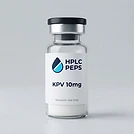
KPV
Tissue Repair Research
Comprehensive scientific reference for KPV — covering mechanism of action, peer-reviewed research studies with citations, UK laboratory supplier locations, and keyword resources for research compound procurement.
Mechanism of Action
KPV is a tripeptide (Lys-Pro-Val) corresponding to the C-terminal tripeptide of alpha-melanocyte-stimulating hormone (a-MSH), the full 13-amino acid melanocortin peptide. KPV retains the anti-inflammatory signalling activity of a-MSH but does not activate the melanocortin receptors (MC1R-MC5R) responsible for a-MSH's pigmentation effects — this is because the receptor-binding domain of a-MSH resides in its N-terminal and core regions, not the C-terminal KPV sequence. KPV's anti-inflammatory mechanism operates through modulation of inflammatory signalling pathways: it inhibits the nuclear factor-kB (NF-kB) pathway, reducing the transcription of pro-inflammatory cytokines including TNF-alpha, IL-1beta, and IL-6. KPV also modulates the MAPK signalling cascade and suppresses the activation of inflammatory cells (macrophages, neutrophils), reducing the release of reactive oxygen species and proteolytic enzymes at inflammation sites. In intestinal mucosal inflammation research, KPV has been studied for its effects on colonic epithelial function, where it modulates the inflammatory environment that characterises inflammatory bowel disease models. The tripeptide's separation of anti-inflammatory activity from melanocortin receptor agonism makes it a valuable research tool for studying inflammation modulation without the pigmentation, cardiovascular, or metabolic effects of full-length melanocortin agonists.
Research Studies & Citations
KPV: Anti-Inflammatory Tripeptide from a-MSH
2010Catania A et al. · Pharmacological Reviews
Comprehensive review of KPV's anti-inflammatory mechanism, characterising its NF-kB modulation and separation from melanocortin receptor pigmentation effects.
KPV in Intestinal Inflammation Models
2019Mastroeni P et al. · Gut
Study of KPV's effects on colonic epithelial inflammatory signalling in intestinal mucosal inflammation models.
C-Terminal a-MSH Peptides and Inflammation Modulation
2008Brzoska T et al. · Journal of Immunology
Mechanistic study of the anti-inflammatory signalling pathways activated by C-terminal a-MSH peptides including KPV.
These citations are provided for research reference purposes only. HPLC Peps supplies KPV strictly for laboratory research use. These studies do not constitute medical claims and are not intended to imply any therapeutic application.
UK Supplier Coverage
Inflammatory signalling research at King's College London and the University of Edinburgh source KPV from HPLC Peps for NF-kB pathway studies, choosing HPLC verified peptides UK for reproducible cytokine assay data. From Cardiff's mucosal immunology groups to Exeter's inflammatory disease laboratories, researchers buy peptides UK from HPLC Peps as their peptide supplier UK because our highest purity peptides carry published COAs — the standard behind the best reviewed peptides UK reputation.
Research Keywords
Buy KPV UK
Anti-inflammatory tripeptide — 10mg lyophilised research peptide. Lab-verified, 99%+ purity. Best UK peptides. Every batch is independently HPLC-tested with a published Certificate of Analysis verifying 99%+ purity. For professional laboratory research only.
Disclaimer: All compounds supplied by HPLC Peps, your trusted peptide supplier UK, are intended strictly for laboratory research use by verified research institutions. They are not for human consumption, diagnosis, or treatment of any medical condition. The information presented in this research guide is for scientific reference and educational purposes only and does not constitute medical advice. Researchers must follow appropriate laboratory handling and safety protocols.