LL-37
Tissue Repair Research
Comprehensive scientific reference for LL-37 — covering mechanism of action, peer-reviewed research studies with citations, UK laboratory supplier locations, and keyword resources for research compound procurement.
Mechanism of Action
LL-37 is the only human cathelicidin-derived antimicrobial peptide (AMP), consisting of 37 amino acids released by proteolytic cleavage of the human cationic antimicrobial protein (hCAP18) precursor. LL-37 is a key effector of the innate immune system, exhibiting dual functionality: direct antimicrobial activity and immunomodulatory signalling. As an antimicrobial peptide, LL-37's mechanism centres on its cationic (positively charged) amphipathic structure — the peptide has a net positive charge at physiological pH and a structure that segregates hydrophobic and hydrophilic residues. This allows LL-37 to bind to negatively charged bacterial cell membranes (which are enriched in lipopolysaccharide in Gram-negative bacteria and lipoteichoic acid in Gram-positive bacteria) and insert into the lipid bilayer, forming pores that disrupt membrane integrity and cause microbial cell death. Beyond direct antimicrobial activity, LL-37 functions as an immunomodulatory signalling molecule: it acts as a ligand for formyl peptide receptor 2 (FPR2), purinergic P2X7 receptor, and epidermal growth factor receptor (EGFR), modulating immune cell recruitment, cytokine production, and inflammation resolution. LL-37 also neutralises bacterial lipopolysaccharide (LPS) and lipoteichoic acid, preventing TLR4-mediated inflammatory cascade activation. In wound healing, LL-37 promotes re-epithelialisation and angiogenesis through EGFR transactivation.
Research Studies & Citations
LL-37: The Human Cathelicidin Antimicrobial Peptide
2006Durr UHM et al. · Accounts of Chemical Research
Comprehensive review of LL-37's structure, antimicrobial membrane-disruption mechanism, and immunomodulatory signalling functions.
LL-37 and Innate Immune Signalling
2012Kuroda K et al. · Journal of Innate Immunity
Study of LL-37's role as an immunomodulatory signalling molecule, characterising its FPR2 and P2X7 receptor interactions and cytokine modulation.
LL-37 in Wound Healing and Angiogenesis
2003Heilborn JD et al. · Journal of Investigative Dermatology
Study demonstrating LL-37's promotion of re-epithelialisation and angiogenesis through EGFR transactivation in wound healing models.
These citations are provided for research reference purposes only. HPLC Peps supplies LL-37 strictly for laboratory research use. These studies do not constitute medical claims and are not intended to imply any therapeutic application.
UK Supplier Coverage
Antimicrobial peptide research at the University of Liverpool and innate immunity groups at Cardiff University source LL-37 from HPLC Peps for cathelicidin signalling studies, selecting HPLC verified peptides UK for consistent membrane assay data. From Belfast's infectious disease research centres to Brighton's immunology laboratories, researchers buy peptides UK from HPLC Peps as their peptide supplier UK because our highest purity peptides carry published COAs confirming 99%+ purity.
Research Keywords
Buy LL-37 UK
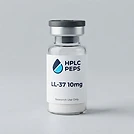
Human cathelicidin antimicrobial peptide — 10mg lyophilised research peptide. Lab-verified, 99%+ purity. Best UK peptides. Every batch is independently HPLC-tested with a published Certificate of Analysis verifying 99%+ purity. For professional laboratory research only.
Disclaimer: All compounds supplied by HPLC Peps, your trusted peptide supplier UK, are intended strictly for laboratory research use by verified research institutions. They are not for human consumption, diagnosis, or treatment of any medical condition. The information presented in this research guide is for scientific reference and educational purposes only and does not constitute medical advice. Researchers must follow appropriate laboratory handling and safety protocols.