NAD+ (Nicotinamide Adenine Dinucleotide)
Growth Hormone Research
Comprehensive scientific reference for NAD+ (Nicotinamide Adenine Dinucleotide) — covering mechanism of action, peer-reviewed research studies with citations, UK laboratory supplier locations, and keyword resources for research compound procurement.
Mechanism of Action
Nicotinamide Adenine Dinucleotide (NAD+) is a critical cellular coenzyme found in all living cells, functioning in two distinct capacities: as an electron carrier in redox reactions and as a cosubstrate for NAD+-consuming enzymes. In its redox role, NAD+ and its reduced form NADH serve as the primary electron carriers in cellular metabolism: NAD+ accepts hydride ions (H-) from metabolic intermediates in glycolysis, the TCA cycle, and beta-oxidation, transferring them to the electron transport chain (Complex I) for ATP production via oxidative phosphorylation. This redox cycling is fundamental to cellular energy production. In its cosubstrate role, NAD+ is consumed by three major enzyme families: (1) Sirtuins (SIRT1-7) — NAD+-dependent protein deacetylases that remove acetyl groups from target proteins (histones, transcription factors, metabolic enzymes), linking cellular NAD+ status to gene expression, metabolic regulation, and longevity signalling. Sirtuin activity is directly dependent on NAD+ availability, making NAD+ a metabolic sensor that modulates sirtuin-mediated pathways including PGC-1alpha activation (mitochondrial biogenesis), FOXO transcription factor activation (stress resistance), and p53 deacetylation. (2) Poly(ADP-ribose) polymerases (PARPs) — NAD+-consuming enzymes involved in DNA repair signalling. (3) CD38/CD157 ectoenzymes — NAD+-degrading enzymes involved in calcium signalling.
Research Studies & Citations
NAD+ in Ageing and Longevity Signalling
2015Verdin E et al. · Nature Reviews Molecular Cell Biology
Comprehensive review of NAD+'s dual role in redox metabolism and sirtuin/PARP signalling, and its decline in ageing.
Sirtuins and NAD+-Dependent Deacetylation
2010Imai S et al. · Trends in Endocrinology & Metabolism
Review of sirtuin NAD+-dependent mechanisms and their role in metabolic regulation and longevity pathways.
NAD+ and Mitochondrial Function
2017Fang EF et al. · Nature Reviews Molecular Cell Biology
Study of NAD+'s role in mitochondrial energy metabolism and its connection to sirtuin-mediated mitochondrial biogenesis signalling.
These citations are provided for research reference purposes only. HPLC Peps supplies NAD+ (Nicotinamide Adenine Dinucleotide) strictly for laboratory research use. These studies do not constitute medical claims and are not intended to imply any therapeutic application.
UK Supplier Coverage
NAD+ biology and sirtuin signalling research at the University of Cambridge and the University of Oxford source NAD+ from HPLC Peps for longevity pathway studies, selecting HPLC verified peptides UK for reproducible deacetylase assay data. From Aberdeen's mitochondrial research groups to Edinburgh's ageing biology laboratories, researchers buy peptides UK from HPLC Peps as their peptide supplier UK because our highest purity peptides carry published COAs confirming 99%+ purity.
Research Keywords
Buy NAD+ (Nicotinamide Adenine Dinucleotide) UK
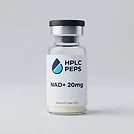
Nicotinamide adenine dinucleotide — 20mg lyophilised research compound. Lab-verified, 99%+ purity. Best UK peptides. Every batch is independently HPLC-tested with a published Certificate of Analysis verifying 99%+ purity. For professional laboratory research only.
Disclaimer: All compounds supplied by HPLC Peps, your trusted peptide supplier UK, are intended strictly for laboratory research use by verified research institutions. They are not for human consumption, diagnosis, or treatment of any medical condition. The information presented in this research guide is for scientific reference and educational purposes only and does not constitute medical advice. Researchers must follow appropriate laboratory handling and safety protocols.