TB-500
Tissue Repair Research
Comprehensive scientific reference for TB-500 — covering mechanism of action, peer-reviewed research studies with citations, UK laboratory supplier locations, and keyword resources for research compound procurement.
Mechanism of Action
Researchers looking to buy peptides UK for cell migration and tissue remodelling research choose TB-500, a synthetic fragment of thymosin beta-4 (Tb4), a naturally occurring 43-amino acid intracellular peptide that is the most abundant G-actin (globular actin) sequestering protein in mammalian cells. The primary mechanism of TB-500 centres on its actin-binding activity: by sequestering G-actin monomers, Tb4 regulates the dynamic polymerisation and depolymerisation of the actin cytoskeleton — a process fundamental to cell motility, migration, and tissue remodelling. During tissue repair, cells must migrate to injury sites; TB-500 promotes this migration by providing a pool of actin monomers available for rapid filament assembly at the leading edge of migrating cells. Beyond actin regulation, Tb4 upregulates the expression of matrix metalloproteinases (MMPs) that remodel the extracellular matrix, and promotes cell survival through anti-apoptotic signalling via the PI3K/Akt pathway. Tb4 also exhibits anti-inflammatory effects by inhibiting nuclear factor-kB (NF-kB) signalling and reducing pro-inflammatory cytokine production. In cardiac tissue, Tb4 has been shown to promote coronary vessel development and cardiomyocyte survival, and in dermal wound models, it accelerates re-epithelialisation and collagen deposition. The peptide's broad activity across actin regulation, cell migration, and anti-inflammatory signalling makes it a cornerstone of tissue regeneration research.
Research Studies & Citations
Thymosin Beta-4 and Actin-Based Cell Motility
2005Goldstein AL et al. · Nature Reviews Molecular Cell Biology
Comprehensive review of Tb4's actin-sequestering mechanism and its role in cell migration, establishing the molecular basis for TB-500's tissue repair activity.
Thymosin Beta-4 in Cardiac Repair and Coronary Development
2010Srivastava D et al. · Nature
Study demonstrating Tb4's role in coronary vessel development and cardiomyocyte survival, characterising its pro-angiogenic and anti-apoptotic signalling.
TB-500 and Dermal Wound Healing
2007Philp D et al. · Journal of Investigative Dermatology
Preclinical study of Tb4 in skin wound models, demonstrating accelerated re-epithelialisation and collagen matrix deposition.
Thymosin Beta-4 Anti-Inflammatory Signalling
2010Sosne G et al. · Annals of the New York Academy of Sciences
Mechanistic study characterising Tb4's NF-kB inhibition and anti-inflammatory cytokine modulation in tissue repair models.
These citations are provided for research reference purposes only. HPLC Peps supplies TB-500 strictly for laboratory research use. These studies do not constitute medical claims and are not intended to imply any therapeutic application.
UK Supplier Coverage
Cardiac repair research at the University of Liverpool and dermal wound healing groups at the University of Bristol source TB-500 from HPLC Peps for actin cytoskeleton studies, relying on HPLC verified peptides UK for consistent assay performance. From Newcastle's regenerative medicine institutes to Sheffield's tissue engineering labs, researchers buy peptides UK from HPLC Peps as their peptide supplier UK because our highest purity peptides ship with published COAs — the standard behind the best peptides UK.
Research Keywords
Buy TB-500 UK
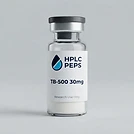
Thymosin beta-4 fragment — 30mg research peptide. Lab-verified, 99%+ purity. Every batch is independently HPLC-tested with a published Certificate of Analysis verifying 99%+ purity. For professional laboratory research only.
£77.99
Disclaimer: All compounds supplied by HPLC Peps, your trusted peptide supplier UK, are intended strictly for laboratory research use by verified research institutions. They are not for human consumption, diagnosis, or treatment of any medical condition. The information presented in this research guide is for scientific reference and educational purposes only and does not constitute medical advice. Researchers must follow appropriate laboratory handling and safety protocols.