Tirzepatide
Metabolic Research
Comprehensive scientific reference for Tirzepatide — covering mechanism of action, peer-reviewed research studies with citations, UK laboratory supplier locations, and keyword resources for research compound procurement.
Mechanism of Action
Recognised among the best reviewed peptides UK for dual incretin research, tirzepatide is a first-in-class dual glucose-dependent insulinotropic polypeptide (GIP) and GLP-1 receptor agonist, representing a novel pharmacological class of unimolecular multi-agonists. Structurally, tirzepatide is a 39-amino acid peptide based on the GIP backbone with a C-20 fatty di-acid chain conjugated to lysine at position 20, enabling albumin binding and extending the half-life to approximately 5 days. The peptide retains GIP receptor affinity while incorporating modifications that confer GLP-1 receptor agonism, allowing simultaneous activation of both major incretin pathways. At the GIP receptor (GIPR), tirzepatide activates Galphas-coupled signalling in pancreatic beta-cells, potentiating glucose-dependent insulin secretion through cAMP/PKA pathways — complementing the GLP-1 receptor-mediated insulinotropic effect. The dual agonism produces supra-additive insulin secretion compared to selective GLP-1 agonism alone, as GIP and GLP-1 receptors activate partially distinct intracellular signalling cascades (GIP favouring PKA, GLP-1 favouring EPAC2). Beyond the pancreas, GIP receptor activation in adipose tissue modulates lipid metabolism and insulin sensitivity, while central GLP-1 receptor activation contributes to appetite suppression. The integrated dual-receptor signalling footprint produces broader metabolic pathway modulation than any single-receptor agonist.
Research Studies & Citations
SURPASS-2: Tirzepatide versus Semaglutide Once Weekly
2021Frias JP et al. · New England Journal of Medicine
Head-to-head trial demonstrating superior HbA1c reduction and weight loss with tirzepatide versus semaglutide, establishing the clinical advantage of dual GIP/GLP-1 agonism over selective GLP-1 agonism.
SURPASS-1: Tirzepatide Monotherapy in Type 2 Diabetes
2021Rosenstock J et al. · The Lancet
Phase 3 monotherapy trial confirming significant glycaemic improvement and weight reduction, establishing tirzepatide as a first-in-class dual agonist for metabolic research.
SURMOUNT-1: Tirzepatide for Obesity Management
2022Jastreboff AM et al. · New England Journal of Medicine
Phase 3 trial demonstrating unprecedented weight reduction with tirzepatide in adults with obesity, confirming the dual incretin mechanism's applicability beyond glycaemic control.
Dual GIP/GLP-1 Receptor Agonism: Mechanistic Rationale
2020Willard FS et al. · Molecular Metabolism
Comprehensive review of the molecular pharmacology underpinning unimolecular dual incretin agonism, characterising the distinct and complementary signalling pathways activated at GIP and GLP-1 receptors.
These citations are provided for research reference purposes only. HPLC Peps supplies Tirzepatide strictly for laboratory research use. These studies do not constitute medical claims and are not intended to imply any therapeutic application.
UK Supplier Coverage
Metabolic research teams at the University of Cambridge and the University of Glasgow source tirzepatide from HPLC Peps for dual-incretin receptor studies, relying on our HPLC verified peptides UK for reproducible assay data. Laboratories from Birmingham to Cardiff buy peptides UK from HPLC Peps because our published Certificates of Analysis confirm 99%+ purity on every batch — establishing us as the best peptide supplier UK for advanced metabolic signalling research.
Research Keywords
Buy Tirzepatide UK
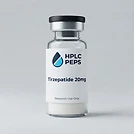
Dual GIP/GLP-1 receptor agonist — 20mg lyophilised research compound. Lab-verified, 99%+ purity. Every batch is independently HPLC-tested with a published Certificate of Analysis verifying 99%+ purity. For professional laboratory research only.
£57.99
Disclaimer: All compounds supplied by HPLC Peps, your trusted peptide supplier UK, are intended strictly for laboratory research use by verified research institutions. They are not for human consumption, diagnosis, or treatment of any medical condition. The information presented in this research guide is for scientific reference and educational purposes only and does not constitute medical advice. Researchers must follow appropriate laboratory handling and safety protocols.