Vesugen
Tissue Repair Research
Comprehensive scientific reference for Vesugen — covering mechanism of action, peer-reviewed research studies with citations, UK laboratory supplier locations, and keyword resources for research compound procurement.
Mechanism of Action
Vesugen is a peptide bioregulator derived from blood vessel tissue, studied for its effects on vascular health signalling and endothelial cell function. As a tissue-specific peptide complex, Vesugen's mechanism centres on modulating the metabolic activity of vascular tissue — particularly the endothelial cells that line the interior surface of blood vessels and the smooth muscle cells that comprise the vessel wall. The endothelium is a critical signalling organ: endothelial cells produce nitric oxide (NO) via endothelial nitric oxide synthase (eNOS), regulate vascular tone, control vascular permeability, and modulate platelet aggregation and leukocyte adhesion. Vesugen is studied for its potential to upregulate endothelial function pathways that support vascular homeostasis, including the PI3K/Akt/eNOS pathway for nitric oxide production and the VEGF pathway for vascular maintenance and repair. The peptide complex may also modulate the balance between factors that promote vascular health (NO, prostacyclin) and those that promote vascular pathology (endothelin-1, inflammatory cytokines), making it relevant to research on vascular ageing, endothelial dysfunction, and vascular tissue regeneration.
Research Studies & Citations
Vascular-Derived Peptide Bioregulators
2018Khavinson VK et al. · Bulletin of Experimental Biology and Medicine
Review of tissue-specific peptide bioregulators including Vesugen, characterising their effects on vascular tissue signalling.
Endothelial Function and Vascular Homeostasis
2017Michiels C et al. · Arteriosclerosis, Thrombosis, and Vascular Biology
Review of endothelial NO signalling and its role in vascular health, providing mechanistic context for Vesugen research.
Peptide Bioregulation of Vascular Tissue Metabolism
2019Anisimov VN et al. · Biogerontology
Study of peptide bioregulator effects on vascular tissue gene expression and endothelial function pathways.
These citations are provided for research reference purposes only. HPLC Peps supplies Vesugen strictly for laboratory research use. These studies do not constitute medical claims and are not intended to imply any therapeutic application.
UK Supplier Coverage
Vascular biology and endothelial function research at the University of Bristol and the University of Leeds source Vesugen from HPLC Peps for eNOS signalling studies, choosing HPLC verified peptides UK for reproducible nitric oxide assay data. From Reading's cardiovascular research groups to Coventry's vascular ageing laboratories, researchers buy peptides UK from HPLC Peps as their peptide supplier UK because our highest purity peptides carry published COAs confirming 99%+ purity.
Research Keywords
Buy Vesugen UK
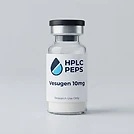
Vascular-derived peptide bioregulator — 10mg lyophilised research peptide. Lab-verified, 99%+ purity. Best UK peptides. Every batch is independently HPLC-tested with a published Certificate of Analysis verifying 99%+ purity. For professional laboratory research only.
Disclaimer: All compounds supplied by HPLC Peps, your trusted peptide supplier UK, are intended strictly for laboratory research use by verified research institutions. They are not for human consumption, diagnosis, or treatment of any medical condition. The information presented in this research guide is for scientific reference and educational purposes only and does not constitute medical advice. Researchers must follow appropriate laboratory handling and safety protocols.