The Difference Between Peptides and Proteins
Key takeaways
- Introduction
- Size
- Structure
- Function
Introduction
Peptides and proteins are both chains of amino acids, but they differ in size, structure, and function. Understanding the distinction is important for research, especially when choosing the best peptides UK.
Size
The primary difference is size:
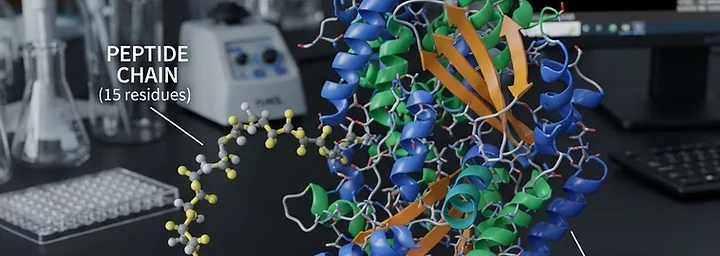
- Peptides — short chains of amino acids, typically 2–50 residues
- Proteins — longer chains, often hundreds or thousands of amino acids
This size difference is not arbitrary — it reflects a real chemical and functional distinction. Peptides are small enough to be synthesised chemically (via SPPS), while proteins are typically produced biologically (via recombinant DNA technology).
Structure
Proteins have complex three-dimensional structures:
- Primary — the amino acid sequence
- Secondary — local structures like alpha-helices and beta-sheets
- Tertiary — the overall 3D shape of a single protein chain
- Quaternary — the arrangement of multiple protein subunits
Peptides, being shorter, typically have less complex structures. They may adopt secondary structures but generally lack the elaborate tertiary and quaternary structures of proteins.
Function
Both peptides and proteins serve biological functions:
- Peptides — often function as hormones, neurotransmitters, and signalling molecules (e.g. insulin, GLP-1, endorphins)
- Proteins — serve as enzymes, structural components, antibodies, and transport molecules
Research Implications
The size difference has practical implications for research:
- Synthesis — peptides can be chemically synthesised; proteins typically require biological production
- Stability — peptides are generally less stable than proteins but can be lyophilised for long-term storage
- Delivery — peptides' smaller size makes them easier to study in receptor binding and signalling assays
- Purity — peptide purity is measured by HPLC; protein purity is measured by different methods (SDS-PAGE, etc.). For the highest purity peptides, ensure your supplier uses rigorous quality control.
Examples
Peptides
- Semaglutide — 31 amino acids
- BPC-157 — 15 amino acids
- GHK-Cu — 3 amino acids
Proteins
- Albumin — 585 amino acids
- Immunoglobulin G — ~1300 amino acids
- Haemoglobin — 574 amino acids
Research Use Only
All peptides discussed are for laboratory research use only. Not for human consumption, medical diagnosis, or treatment.
UK Locations Mentioned in This Article
From the locations referenced above to laboratories nationwide — HPLC Peps delivers research peptides across Britain.

Related Research Compounds
Lab-verified, 99%+ purity compounds relevant to this research — each with a published Certificate of Analysis.


Semaglutide 30mg
GLP-1 receptor agonist — 30mg lyophilised research compound. Lab-verified, 99%+ purity.


BPC-157 30mg
Body protection compound — 30mg synthetic peptide. Lab-verified, 99%+ purity.


GHK-Cu 100mg
Copper peptide GHK-Cu — 100mg research compound. Lab-verified, 99%+ purity.
Research-grade peptides for your laboratory
Browse the shop